
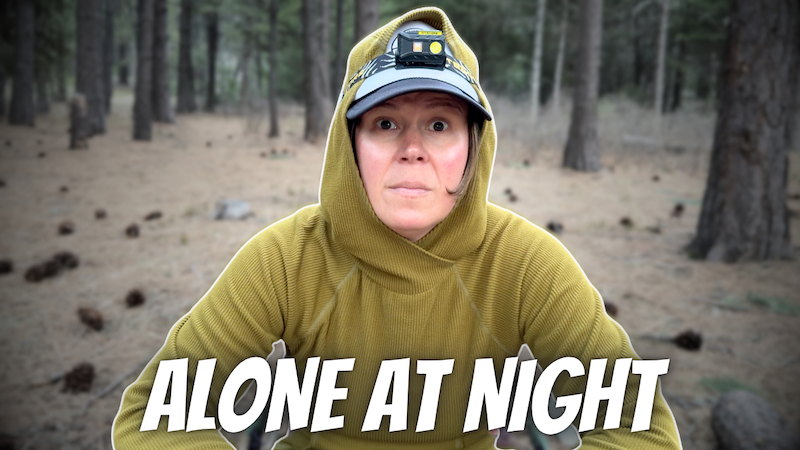
Most people think the hardest part of backpacking alone is the hiking. It’s not.
It’s lying alone in your tent at night, in the dark, hearing every sound around you and wondering:
Am I actually safe out here?
If the idea of sleeping outside alone has ever made you second guess going on your first solo backpacking trip, you’re not alone. This is one of the biggest fears beginner solo backpackers face, especially women.
And no one really talks about it.
People talk about:
- Backpacking gear
- Trail mileage
- Food
- Navigation
- Safety tips
Very few people talk about what happens mentally once the sun goes down and it’s just you, your thoughts and the sounds of the woods around you.
As a solo female backpacker who started backpacking at 40 and now helps women learn how to backpack alone confidently, I’ve learned something important:
The fear usually isn’t about the hiking itself. It’s about being alone with your thoughts in the backcountry at night.
Why Sleeping Alone Outside Feels So Intense
During the day, your brain is busy.
You’re:
- Hiking
- Filtering water
- Setting up camp
- Looking at the scenery
- Paying attention to the trail
But at night? Everything gets quiet. When things get quiet, your thoughts get louder.
That’s when your brain starts asking questions like:
What was that sound?
Did I hear something outside my tent?
What if a bear comes into camp?
What if someone approaches my tent?
What if I made a mistake coming out here alone?
The hardest part of backpacking alone isn’t physical. It’s mental.
My First Solo Backpacking Night in Montana
Last year, I backpacked alone to a campsite here in Montana for the very first time. I was terrified.
Every sound felt huge.
Every movement made me jump.
Every pinecone falling from a tree sounded like a bear walking into camp.
I almost talked myself into packing up and hiking back to the trailhead.
To make matters worse, a bear actually wandered near my campsite around dinner time. Thankfully, I was able to scare it away, but after that, my nervous system stayed on high alert for the rest of the evening.
This year, I decided to go back to the exact same campsite.
Same trail. Same campsite.
But this time, everything felt different. Not because the area had changed but because I had changed.
What’s Actually Happening Mentally at Night
When you’re backpacking alone, nighttime tends to amplify whatever thoughts already exist underneath the surface.
Silence feels unfamiliar because most of us are constantly surrounded by noise:
- Traffic
- TVs
- Phones
- People
- Appliances
But outside? There’s no distraction. So your awareness increases dramatically.
That’s why:
- Pinecones sound like animals
- Wind sounds bigger
- Small noises feel intense
- Your imagination becomes incredibly active
Nighttime doesn’t create new fears. It amplifies the ones already there.
For many women, especially women navigating anxiety, stress or even perimenopause, those thoughts can feel even louder when you’re out there alone.
The Biggest Shift That Helped Me Feel Safer Backpacking Alone
I stopped trying to eliminate discomfort completely.
Instead, I focused on creating systems that helped me feel:
- Comfortable
- Prepared
- Grounded
- Supported
That changed everything.
Confidence in solo backpacking doesn’t come from never feeling scared. It comes from learning how to move through fear without letting it control your decisions.
How I Sleep Better While Backpacking Alone
1. I Follow a Consistent Camp Routine
Having a routine helps calm my nervous system.
My solo backpacking routine usually looks like this:
- Set up camp
- Filter water
- Make dinner
- Store food properly
- Brush my teeth
- Get comfortable before dark
Simple routines create familiarity, even in unfamiliar places.
2. I Choose Campsites Near Running Water
One of my favorite solo backpacking tips is choosing campsites near natural flowing water whenever possible.
The sound of running water helps soften the silence and gives my brain something calming to focus on.
Instead of hearing every tiny noise in the woods, I hear a steady, soothing background sound all night long.
3. I Make Camp Feel Comfortable
Backpacking alone feels much less intimidating when camp actually feels enjoyable.
A few small comfort items can completely change your experience:
- A comfortable sitting pad or lightweight camp chair
- A warm sleep system
- A good pillow
- Fairy lights inside your tent
- A book to read before bed
Backpacking doesn’t have to feel like survival training. You’re allowed to enjoy yourself out there.
4. I Keep Food Smells Away From Camp
One thing that helps me feel safer at night is knowing I’ve handled food storage properly.
I store:
- Food
- Trash
- Toothpaste
- Scented items
At least 70 adult steps away from my tent in a bear-resistant or critter-proof container.
Knowing I’ve done what I can to reduce wildlife encounters helps my brain relax at night.
5. I Use a Satellite Messenger
One of the best things I ever did for my confidence as a solo backpacker was getting a satellite messenger.
Being able to:
- Check in with family
- Send messages
- Call for help in an emergency
Made a huge difference mentally. Not just for me, but for my family too.
The Truth About Confidence Backpacking Alone
Every single night you spend outside alone teaches your brain something important:
- You’re okay
- You can handle discomfort
- You can problem solve
- You can move through fear
- You’re more capable than you thought
That’s how confidence is built. Not by waiting until you feel fearless. But by doing the thing while feeling nervous and realizing afterward: I made it through.
The Mistake Most Beginner Solo Backpackers Make
A lot of women think they need to eliminate fear before going on a solo backpacking trip. But confidence doesn’t work that way.
You build confidence by:
- Starting small
- Going on low-risk trips
- Repeating the experience
- Gathering evidence that you can do hard things
This is why I always recommend beginner solo backpackers start with:
- Short overnight trips
- Well-marked trails
- Established campsites
- Places relatively close to home
You don’t need to jump into a huge wilderness adventure right away.
Solo Backpacking Isn’t Just About Hiking
This is one of the biggest mindset shifts I teach women inside my coaching program, The Confident Solo Female Backpacker System.
Most women don’t just need:
- Gear recommendations
- Packing lists
- Trail ideas
They also need help navigating:
- Fear
- Overthinking
- Self-doubt
- Anxiety
- Trusting themselves outside alone
Because the mental side of solo backpacking is often the hardest part.
Inside the program, I help women:
- Plan their first backpacking trips
- Build confidence hiking alone
- Practice real backpacking skills
- Get support while actually doing this
You don’t have to figure it all out alone.
You Don’t Need to Stop Feeling Scared
You just need enough support, preparation and experience to realize you can still do this while feeling uncomfortable. Eventually, something amazing starts happening.
The thing that once terrified you becomes:
- Familiar
- Empowering
- Exciting
- Even peaceful
And honestly?
There’s something incredibly powerful about waking up alone in the backcountry after a night you thought you couldn’t handle and realizing: I actually did it.
Ready to Start Backpacking Alone?
If you’re a woman who wants to start solo backpacking but feels overwhelmed by the fear of sleeping outside alone, that’s exactly what I help women work through inside The Confident Solo Female Backpacker System.
Inside the program, I’ll help you:
- Plan your first trip
- Build confidence step-by-step
- Learn backpacking skills
- Practice safely
- Stop overthinking and actually get out on trail
You don’t need to become fearless before you start.
You just need a simple plan, support and the willingness to take the first step.
Disclaimer: The-Hungry-Hiker.com is a participant in the Amazon Affiliate Links and AvantlInks Program, affiliate advertising programs designed to provide a means for sites to earn advertising fees by advertising and linking to Amazon.com and other affiliated sites at no cost to you. Please note, I only link to products and services I personally use and trust.
Nailed it
Thank you! Glad you enjoyed this one.