
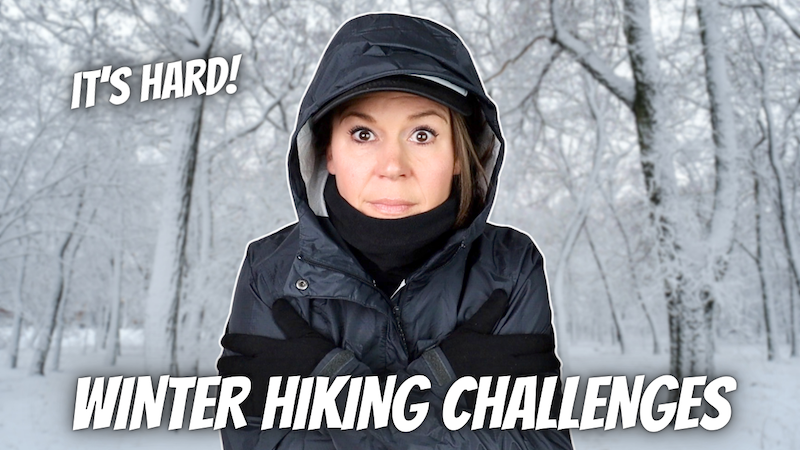
If winter hiking feels harder than it should, you’re not imagining it.
Winter hiking IS harder, but not because you’re weak, inexperienced or doing something wrong.
Most people struggle in the winter because they try to hike the same way they do in the summer…only in colder temperatures and much more challenging terrain and conditions.
Winter hiking doesn’t mean you need to be tough or hardcore.
It requires different systems.
Once you learn how to adapt instead of pushing through fear or discomfort, winter hiking becomes far more manageable…and honestly a lot more enjoyable.
Below are 10 common winter hiking challenges and exactly how I work through each one safely, realistically and without pushing through fear.
If you’ve tried winter hiking before and thought, “Yeah, this is not for me,” this guide will give you clarity and a plan.
Winter Hiking Challenge #1: Hiking in the Snow
Hiking in the snow, especially deep snow, can be exhausting. Not because you’re out of shape, but because snow completely changes how you move.
If you’ve ever post-holed (when your leg drops straight through the snow), you know how tiring and frustrating it can be. Deep snow slows you down and significantly increases your risk of tweaking a knee or ankle.
Instead of trying to “power through” the snow, I adapt by using snowshoes.
Snowshoes spread your weight out, making hiking smoother, safer and far ess exhausting. Using snowshoes isn’t cheating. It’s being efficient and kind to your body.
Winter Hiking Challenge #2: Hiking in the Rain
Winter rain hits very differently than summer rain. It’s colder, heavier and much less forgiving.
If you get wet in the winter and stay wet, that’s when things become uncomfortable and potentially unsafe.
A common mistake is thinking, “I’ll just deal with it.”
Winter rain is not something you want to just deal with.
When rain is in the forecast, I line the inside of my pack with a trash compactor bag and pack everything inside it. This creates a waterproof system that helps keep my gear dry.
I also always wear or carry:
- A waterproof rain jacket
- Waterproof hiking boots
- Gaiters to keep my feet and lower legs warm and dry
Even if rain isn’t in the forecast, I still pack a rain jacket. Consider it insurance…when I don’t bring one, it almost always rains.
Staying dry isn’t about comfort.
Staying dry helps you stay warm and staying warm helps you stay safe.
Winter Hiking Challenge #3: Short Days
Winter hiking comes with shorter days and less daylight, which can feel limiting if you’re used to long summer hikes.
One of the biggest winter mistakes I see is trying to cram the same mileage into fewer daylight hours.
In winter, I plan shorter hikes on purpose and choose a turnaround time instead of a destination time. This reduces the chances of hiking back in the dark.
Turning around early isn’t a failure. It’s good winter decision-making.
I also always carry a fully charged headlamp. Using a headlamp isn’t a sign you messed up. It’s a confidence tool.
Winter Hiking Challenge #4: Muddy, Wet & Icy Trails
Winter trails can be slippery and unpredictable. Mud, ice, wet rocks and roots often show up all within the same mile.
Relying on balance and luck isn’t a strategy.
I choose to rely on traction.
In winter, I use:
- Trekking poles for extra stability
- Microspikes when there’s ice on the trail
These tools give me more control and confidence, reducing anxiety about slipping or falling.
Winter conditions demand respect, not bravery. Slowing down and using the right gear for the right conditions helps youstay safe instead of injured.
Winter Hiking Challenge #5: Cold Weather
Cold weather alone isn’t dangerous.
Cold plus wind and moisture is where problems start.
Overheating and sweating can actually make you feel colder later, which is why I follow the mantra:
“Be Bold and Start Cold”
I usually begin my hike in base layers (or a light fleece dress) so my body warms gradually as I love.
My winter layering system includes:
- Base layer (next to skin)
- Mid layer (insulation)
- Outer layer (wind and waterproof)
Hands and feet are priority zones. I pack liner gloves, mittens and wear Hot Sockees (neoprene sleeves that help keep toes warm). I also carry extra hand warmers.
Extra layers aren’t overkill. They’re proper preparation. Weather changes quickly in the winter, especially in the mountains.
Check out my complete Winter Hiking Gear List
Winter Hiking Challenge #6: Dehydration
Winter dehydration sneaks up on people because you don’t feel sweaty.
Cold air is dry and your body still loses fluids, sometimes faster than in summer.
I carry water in an insulated bottle, pack at least two liters and make myself sip regularly instead of waiting until I feel thirsty.
Electrolytes can help and I often pack an 11th Essential, which is a warm drink like tea, soup or hot cocoa.
Just because it’s cold doesn’t mean your body needs less water. It often needs more.
Winter Hiking Challenge #7: Navigation & Obscured Trails
Snow can hide everything…the trailhead, trail signs and landmarks, which can make winter navigation feel intimidating.
Instead of seeing this as a problem, I treat winter as an opportunity to build navigation skills.
I always carry a map…paper or digital, downloaded on my GPS device. Knowing where I am and where I’m going reduces uncertainty.
onX Backcountry is the ultimate hiking app that can help you plan your next outdoor adventure with confidence. Click Here and use “HungryHiker” to get 20% off your purchase of onX Backcountry OR to start a free 14-day trial of onX Backcountry Elite.
Navigation isn’t about confidence.
It’s about information and information reduces fear.
Winter Hiking Challenge #8: Avalanche Awareness
Not all snow is hiking snow.
A trail that’s perfectly safe in the summer can be dangerous in the winter.
I avoid avalanche terrain altogether and always check the avalanche forecast before heading into the mountains. If I don’t know or I’m not sure, I choose a different hike.
Avoidance is the best avalanche safety strategy.
This isn’t fear. It’s good winter hiking decision-making.
Winter Hiking Challenge #9: Wildlife Encounters
Wildlife doesn’t disappear in winter. Animals are often conserving energy, which can make encounters feel more intense.
Before hiking, I research what wildlife lives in the area and how to respond if I encounter them.
I stay alert, make noise when appropriate and always give wildlife plenty of space.
Preparation and respect go a long way in the backcountry.
Winter Hiking Challenge #10: Motivation To Go Outside
This is the most important challenge.
Motivation rarely shows up before a winter hike. It shows up after.
Winter is the hardest season for me to get outside. It’s dark, cold and often wet. It’s easy to talk yourself into staying home.
But winter hiking builds identity and confidence. You become someone who knows how to adapt instead of waiting for perfect conditions.
I focus on the benefits:
- Fewer crowds
- No bugs Quiet, snow-covered landscapes
- Extending my hiking season year-round
Final Thoughts
If winter hiking feels harder than it should, it’s usually not because you’re doing something wrong.
It’s because no one ever taught you how to overcome winter hiking challenges safely.
This is exactly what I teach inside The Confident Solo Female Backpacker System…helping women learn how to hike and backpack confidently in real-world conditions, without pushing through fear or discomfort.
I help women all over the country go from feeling scared and intimidated about backpacking to feeling comfortable planning their trips so that they feel confident getting out on trail.
If you’re interested in learning more about the backpacking program I created for women, book a free 1:1 Zoom call with me where we’ll talk about your backpacking goals, where you feel stuck and whether my program is the right fit for you.
Watch the Full Video:
Disclaimer: The-Hungry-Hiker.com is a participant in the Amazon Affiliate Links and AvantlInks Program, affiliate advertising programs designed to provide a means for sites to earn advertising fees by advertising and linking to Amazon.com and other affiliated sites at no cost to you. Please note, I only link to products and services I personally use and trust.
No matter how few or many layers I try, I sweat a lot and then freeze. My bare head drips in 15 degree weather. I might try this mesh layer and see if that works.
I hike in a light rainpant. More sophisticated than in the past. If sun comes out; I just continue to hike.