
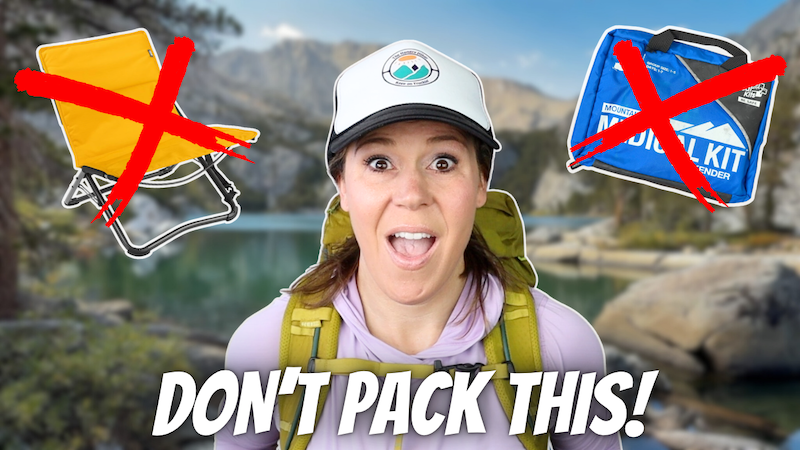
Most beginner backpackers make the exact same mistake on their first trip…They pack WAY too much stuff!
It seems harmless when you’re standing in your living room packing your pack, until you’re about three miles into the hike and your pack suddenly feels like you’re carrying a small refrigerator up a mountain.
I’ve been there.
When I first started backpacking, I showed up with:
- An 85-liter pack
- Multiple hiking outfits
- A giant first aid kit
- Way more water than I needed
- And enough food to survive a small apocalypse
Halfway up the first climb, I was literally crying.
Why Beginners Always Overpack
Here’s the thing, I completely get it.
You’re heading into the wilderness (maybe alone), and your brain starts spiraling:
- What if I forget something?
- What if I run out of food?
- What if something goes wrong?
So, you add extra clothes. Extra food. Extra gear. Then suddenly, your pack weighs 35+ pounds. This is what we call “packing your fears.”
It sounds smart, until you realize you’re carrying 10 pounds of “what ifs.”
The truth? Most beginner backpackers are carrying things they don’t actually need. All that extra weight makes your trip harder, more exhausting and way less fun. So, let’s fix that.
Too Many Clothes
This is one of the biggest ones.
When I first started, I thought I needed multiple hiking outfits, like I was going on some kind of wilderness fashion show. Here’s reality though: You’re going to get dirty. No matter what.
Now I follow a simple rule: one outfit to hike in and one outfit to sleep in That’s it.
The only extras I carry on a trip are socks and underwear. This alone can help save you from carrying several pounds.
Too Much Food
I’ll be honest, I still catch myself packing way too much backpacking food.
There’s always that voice in my head that says: “What if I get REALLY hungry?” Beginners tend to always overpack food, sometimes even heavy stuff like canned goods. Do yourself a favor and please don’t do this to yourself.
Instead:
- Plan your meals and put together a meal plan for your trip
- Bring just enough food for each day
- Add one small emergency meal/snack
Focus on lightweight, calorie-dense foods like:
- Tortillas
- Nut butter
- Ramen
- Tuna packets
- Oatmeal
- Trail mix
Ditch bulky packaging whenever possible. Your back will thank you.
Giant First Aid Kits
I used to think: “Bigger kit = safer.” So, I bought a huge first aid kit from REI. The problem though was that it was heavy, bulky and I didn’t even know how to use half of it. Nowadays, I prefer to make my own backcountry first aid kit and stock it with things I know how to use.
When it comes to your first aid kit, you only need the basics:
- Blister care
- Bandages
- Pain relievers
- A few medications
- Gauze or something for bleeding
You’re not carrying an ER on your back. You’re just preparing for minor issues.
Camp Chairs
I get it. Sitting in a comfy chair at camp sounds amazing.
The issue with most backpacking chairs is that they can be heavy, bulky and sometimes totally unnecessary if you’re not planning on spending a lot of time in camp.
Instead, bring a lightweight sit pad. These typically weigh almost nothing and they do the job just fine.
Full-Size Toiletries
Full tubes of toothpaste. Bottles of shampoo. Lotion. That weight can add up fast.
Instead, use travel-size containers and bring only what you truly need Honestly? Your standards will shift pretty quickly when you’re out there.
I like keeping my toiletries simple: toothpaste, sunscreen and hand sanitizer or powdered soap That’s it.
“What If” Gear
This is where fear really shows up.
Things like:
- Big knives
- Hatchets
- Massive repair kits
Before packing any of these things for a trip, ask yourself: “Am I REALLY going to use this?”
Keep it simple. A lightweight multi-tool, foldable knife or small pair of travel scissors will handle most situations out in the backcountry.
Too Many Electronics
Some beginner backpackers will bring a phone, camera, extra batteries, a tablet, a Kindle and a bunch of random charging cords. You don’t need all of that.
With your phone, you can navigate, take books, download books and podcasts and play music.
When packing electronics for your trip, only consider bringing your phone, a small power bank, a satellite messenger and charging cords only for the electronics you plan on bringing.
Before leaving the trailhead, make sure to put your phone in airplane mode to save battery while you’re out of cell and WiFi service.
Too Much Water
Water is heavy. 1 liter = about 2.2 pounds.
This means if you plan on carrying 4 liters of water, you’ll carry nearly 9 extra pounds.
For a much lighter and easier option, know where the water sources are along your route, bring a water filter and only carry just enough water to get you to the next water source.
Bulky Cooking Systems
Some beginners might think they need to bring full kitchen setups with multiple pans and pots, bowls, plates and cups out in the backcountry.
Backpacking cooking should be lightweight and simple, especially when you’re first starting out. This can include a small backpacking stove, one lightweight pot, an insulated food cozy and either a spoon or spork.
That’s it. Save the fancy cooking for car camping.
Oversized Backpack
This might be the biggest mistake made of all.
I started my backpacking journey with an 85-liter pack because I thought: “More space = better.” Nope. More stuff actually meant more stuff and more weight. Most beginners only need a pack with a 50–60 liter capacity.
Having a smaller pack mean more intentional packing and the less weight you’ll have to carry on your back.
How Much Should Your Pack Weigh?
If you guessed earlier, here’s a good target:
25–30 pounds (including gear, fuel, food and water)
If your pack is heavier than that, there’s a good chance you’re carrying things you don’t actually need.
Curious about the gear I bring for my backpacking trips? Check out my Backpacking Gear List (includes links for where you can find everything online).
The Real Goal
When you’re just starting out, backpacking isn’t about bringing more. It’s about bringing the right things that you’ll actually need for the conditions you’ll be hiking in.
When your pack is lighter:
- Hiking feels easier
- You enjoy the experience more
- You feel more confident
And that’s what actually gets you to come back and do it again.
Want Help Planning Your First Solo Backpacking Trip?
If you want a simple, step-by-step way to plan your first solo backpacking trip (without overpacking or overthinking everything), download my Free Guide: The First Solo Backpacking Trip Roadmap.
Inside this free guide, you’ll learn:
- A simple 5-step planning framework
- Gear essentials
- Food planning basics
- Safety tips for hiking alone
- How to handle fear when it shows up
This is the exact framework I wish I had when I first started.
Final Thought
You don’t need more gear. You need less gear and better intentions when packing your pack for a trip. Once you figure that out, backpacking gets a whole lot more fun!
Disclaimer: The-Hungry-Hiker.com is a participant in the Amazon Affiliate Links and AvantlInks Program, affiliate advertising programs designed to provide a means for sites to earn advertising fees by advertising and linking to Amazon.com and other affiliated sites at no cost to you. Please note, I only link to products and services I personally use and trust.