
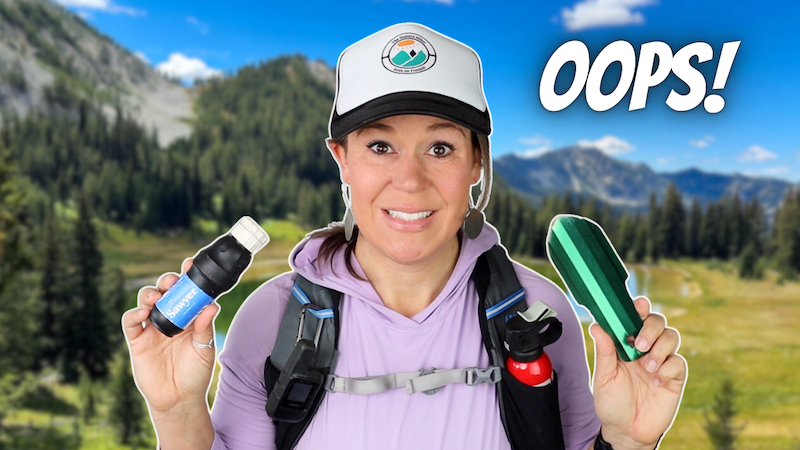
If you’re planning your first backpacking trip and feeling excited…but also nervous, overwhelmed or secretly wondering, “What if I’m not cut out for this?” … you’re not alone.
When I planned my very first backpacking trip, I thought I needed to know everything before I went. I overpacked, overthought and still showed up feeling wildly unprepared.
In this post, I’m sharing 10 beginner backpacking mistakes I made, what I wish I’d known before going on my first trip and how you can avoid these same pitfalls so your first trip is more enjoyable, safer and far less stressful.
Beginner Backpacking Mistake #1: Packing Too Much
One of the biggest lessons I learned early on is that every pound and ounce matters.
I used to think packing more meant being prepared. In reality, it just made me tired faster.
A helpful guideline for beginners is to aim for a pack weight that’s 15–20% of your body weight. For example, if you weigh 150 pounds, your pack should ideally be 30 pounds or less.
This isn’t a hard rule. Trip length, terrain, season, and water needs all effect pack weight. But it’s a helpful starting point.
Ways to reduce pack weight:
- Only bring the essentials
- Choose lighter gear for your Big 3 (pack, shelter, sleep system)
- Share gear if you’re hiking with others
- Bring calorie-dense foods instead of bulky ones
And remember, water adds up fast! One liter of water weighs about two pounds. If you know your water sources, you won’t need to carry as much.
A lighter pack doesn’t make you tougher. It makes your trip more enjoyable, safer and comfortable.
Beginner Backpacking Mistake #2: Not Breaking in Gear at Home
Your first overnight backpacking trip is not the time to try new gear.
Before heading out, practice using all of your gear:
- Set up your tent
- Test your stove and water filter
- Try out your meals and snacks
- Sleep on your sleep system
- Hike in the shoes and clothing you’ll wear
- Practice packing and unpacking your pack
- Practice using navigation apps and emergency devices
- Download offline maps if you plan to use navigation apps
Pitch your tent in your yard, filter water, boil water in your stove, practice packing and unpacking your pack and make sure everything in your pack feels familiar.
Familiarity = Confidence
When you know your gear, your first trip will feel safer and you’ll have more fun.
Beginner Backpacking Mistake #3: Packing Food I Didn’t Want to Eat
Don’t pack what you think backpackers eat. Bring food you’ll actually enjoy.
Beginner me used to pack food I thought backpackers were supposed to eat. Then by Day Two of my trip, I hated all of the food I brought.
Now, the food I bring on any backpacking trip – no matter how long or short the trip might be – is always based on what I’m currently craving and what I know I’ll actually want while I’m out on trail.
If I’m not excited about the food in my pack, I’m way less likely to eat it and then that food just becomes dead weight in my pack.
Eating enough on trail isn’t just about comfort. It’s also about energy, focus and safety.
When you’re planning your trail menu, think about:
- The foods you already love and eat at home
- Including a mix of meals and snacks, not just protein bars
- Calorie-dense foods that don’t weigh a lot
- Things you’ll want to eat even when you’re tired or stressed
You don’t need “perfect” backpacking meals. You need food that sounds good when you’re hungry.
When you’re excited about your food, you’re more likely to eat it and that helps keep you stay fueled and happy during your trip.
Beginner Backpacking Mistake #4: Not Knowing My Water Sources
I didn’t realize how much mental stress came from not knowing where my next water source was.
Because when you’re unsure, you tend to overcompensate and that usually means carrying way more water than you need.
And water adds up fast. One liter of water weighs about two pounds.
If you know you have reliable water sources along the way or are camping near a reliable water source, you don’t need to carry as much…and that can make a huge difference in how your pack feels.
Before your trip, take some time to plan your water:
- Use navigation apps or maps to locate streams, lakes and springs
- Check recent comments or trip reports to see if those water sources are actually flowing
- Remember that water can be seasonal, especially late in the summer
- If you’re unsure, you can always call a local ranger station for current conditions
And no matter what, always carry a water filter or treatment system and know how to use it.
When you know your water sources, you can focus on hiking and enjoying your trip, instead of worrying about running out if it.
Beginner Backpacking Mistake #5: Not Practicing Going to the Bathroom Outside
No one really talks about this online, but it matters more than you think.
Knowing how to pee and poop responsibly outside can remove a huge layer of stress, especially on your first backpacking trip.
Before you go, it helps to understand the basics:
- Find a spot about 200 feet or roughly 200 steps away from water, trails and campsites
- Pick a place where people are unlikely to walk or camp
- Dig a cathole about 6 to 8 inches deep and 4 to 6 inches wide
- Do your business in the hole and bury it when you’re done
- Pack out all used toilet paper, wipes and feminine products
To make this easier, I keep a small, organized “poop kit” in my pack. It has all of the essentials I need like:
- A lightweight trowel for digging
- Portable wipes I use as toilet paper for poop to pack out
- A Kula cloth I use for when I pee
- Hand sanitizer and powdered soap
- Optional items like a menstrual cup or WAG bag for sensitive areas or when hiking over snow
Having a Poop Kit helps keep everything you need in one bright, easy-to-find bag. This way, you can handle the bathroom like a pro without the stress.
Practice using your poop kit and going to the bathroom outside at home or on short hikes before going on your first backpacking trip.
This will help remove stress and awkwardness, leaving you feeling more confident and having one less thing to worry about on your trip.
Beginner Backpacking Mistake #6: Not Learning Basic Navigation
One mistake I made as a beginner backpacker was not making navigation a priority.
Learning how to read a map, use a compass or use a digital navigation app before you’re out on trail can help create confidence in knowing you can stay found while you’re out there.
Once I invested time in learning navigation skills, I was able to:
- Plan trips I wanted to go on
- Explore areas I hadn’t been to before
- Feel confident staying found, even when the trail wasn’t familiar to me
To start building your own confidence:
- Consider taking a basic navigation course, either online or in-person
- Learn how to read a map and use a compass
- Or pick a digital navigation tool like onX Backcountry or Gaia GPS and practice using it
And digital navigation apps aren’t just for on-trail navigation. They’re fantastic trip planning tools too! You can plot your route, check for water sources and even mark campsites before you leave home.
No matter which system you use, pick one, learn it and practice using it before your next trip.
This small step will help give you confidence, reduce anxiety and open the door to exploring new-to-you trails.
Beginner Backpacking Mistake #7: Skimping on My Sleep System
One of the biggest mistakes I made as a beginner backpacker was underestimating how important my sleep system is. When I first started, I thought I could power through cold nights or just throw any sleeping pad on the ground. Boy, was I wrong.
Your sleep system is everything you need to sleep warm and comfortably on the cold ground…and it’s not just your sleeping bag or quilt.
A good sleep system includes an insulated sleeping pad and either a sleeping bag or quilt suited for the season.
The pad isn’t just for comfort. It insulates and protects you from losing body heat to the cold ground and it cushions your bones and joints.
Here’s what I’ve learned about sleeping pads:
- Inflatable pads are lightweight, packable and customizable. You can adjust how much air you put in for perfect comfort.
- The R-value is the most important thing to check. It measures how well the pad resists heat loss. I recommend an R-value of 4 or higher if you’re like me and sleep cold.
- Choose a pad that fits your body size and the terrain you’ll be camping on
And your sleeping bag or quilt? Think about:
- Temperature rating vs season and climate
- Down vs synthetic fill
- Weight and packability
Finding your perfect sleep system often takes trial and error. It took me 2-3 years to figure out mine, and I still upgraded last year to improve warmth and comfort even more.
The takeaway here? Don’t skimp! A quality sleep system will help you sleep well, wake up feeling refreshed and actually enjoy your backpacking trip.
Beginner Backpacking Mistake #8: Not Understanding Food Storage & Bear Safety
When I first started backpacking, the thought of bears out on trail used to scare me. But, once I learned the systems, it wasn’t about the fear. It was about control and safety.
Here’s what I want you to remember: Never keep food or scented items in your tent.
Instead, store them 100 feet or more away in a hard-sided bear canister, approved bear box or do a proper bear hang. And always cook and eat at least 200 feet from where you sleep.
Here are some guidelines to follow for food storage in the backcountry:
No smells in your tent. This includes food, wrappers, toothpaste, deodorant or sunscreen. Keep all scented items at least 100 feet away from your sleeping area.
Use approved safe storage methods like hard-sided bear canisters, metal bear boxes when they’re available or bear hangs which should be 12 feet high, 5 feet from the tree trunk and 5 feet below the branch or use Ursacks and/or odor bags. You’ll also want to always check local regulations to see which methods are approved for the area you plan on traveling in.
Clean up your camp meticulously. This means straining dishwater, packing out all food scraps and trash including banana and orange peels. Keeping a clean campsite helps keep both you and the bears safe.
While you’re hiking: Make noise, talk, clap or sing, especially in dense brush or in low visibility areas.
Consider carrying bear spray. Keep it accessible and not buried in your pack. And if you do see a bear, stay calm, back away slowly and avoid making eye contact
For any wildlife encounter:
- Observe them from a distance
- Always give animals plenty of space
- Never feed them
Following these simple rules can help you stay safe, keep wildlife safe and ensures that bears don’t become habituated to humans. Once you know these systems, you can focus on enjoying your hike instead of worrying about what’s lurking in the trees.
Beginner Backpacking Mistake #9: Underestimating the Mental Game
One of the biggest lessons I learned as a beginner backpacker is that backpacking is just as much a mental challenge as a physical one.
Here are some ways to build a strong mindset as a beginner backpacker:
Start small and practice. Try going on a short hike with a day pack, then an overnight close to home. Each trip builds confidence and reduces anxiety about the unknown.
Embrace discomfort. Things like being tired, carrying a heavy pack or sleeping outside for the first time can be uncomfortable. Treat them as learning opportunities instead of failures.
Positive Self-Talk. Remind yourself that you’re capable. Celebrate small wins like reaching a scenic viewpoint or successfully setting up your tent.
Plan little joys on trail. Bring a favorite snack, pick a beautiful campsite or pause to enjoy the scenery. These moments make the experience enjoyable, not stressful.
Know your why. Why do you want to backpack? Maybe it’s adventure, fitness or connecting with nature. Whatever your why is, write it down or share it with a friend. Use your why as a tool that will help you push through the tough moments when you’re out on trail.
Expect a learning curve. You’ll probably make mistakes during your first few trips like overpacking, misjudging time or forgetting something small, That’s okay! Every mistake is a lesson and a way to build your confidence for your next adventure.
The takeaway here is that backpacking is about learning, growing and enjoying the journey.
Beginner Backpacking Mistake #10: Skipping a Shakedown Trip
One of the best ways to set yourself up for a successful first backpacking trip is to do a shakedown trip first. This is like a “practice run” for your gear, planning and confidence, without the pressure of a full overnight or multi-day adventure.
Start with taking yourself on a short solo or group day hike. Put your loaded pack on, hike a few miles, take breaks, eat your trail snacks and test your pacing. You’ll learn what it feels like to carry your gear and what adjustments you might need to make.
Then, take yourself on an overnight backpacking trip close to home. Try car camping at an established campground. Set up your tent, test your sleep system and spend the night in your tent. Since your car is nearby, you’ll have a safety net if things feel uncomfortable.
Practice using everything. Use your shakedown trip as a way to test packing and unpacking your pack, cooking meals with your stove, filtering water and setting up your sleep system.
The more familiar you are with your gear before your “real” trip, the more confident you’ll feel when you’re out on trail,
Starting small is all about building confidence, not distance. You don’t need to hike 10 miles with a heavy pack on your first trip. Focus on building comfort with using your gear, understanding your body on trail and figuring out what works best for you.
Think of your shakedown trip as a mini-backpacking adventure that gives you all the lessons without the stress. By the time you go on your first real overnight or multi-day trip, you’ll feel capable, confident and ready to enjoy every step.
Bonus: Don’t Wait to Feel 100% Ready
Here’s the mindset shift I wish I’d learned sooner: Confidence comes after action, not before.
Most people, especially beginners, think they have to feel 100% ready before they go backpacking.
They wait for:
- Complete certainty
- Calm nerves
- Or someone else’s approval
They think confidence has to come before action. But that version of “ready” doesn’t actually exist.
The truth is: confidence usually shows up after you start doing the thing you’re nervous about. Confident is built, one small step at a time.
This is why doing things like going on a short hike, spending a night outdoors near home or hiking familiar trails all help prove that you can handle more than you think.
Fear doesn’t mean you’re unprepared. You just need to feel prepared enough to start and that’s where confidence begins.
Final Thoughts
Backpacking is about learning, growing and enjoying the journey. Every trip, even the messy ones, helps build experience and confidence.
If you want help building confidence, skills and a plan that actually makes sense for you and the types of trips you want to go on, check out my online backpacking program for women, The Confident Solo Female Backpacker System.
Watch The Full Video:
DISCLAIMER: This post and video contain affiliate links, which means that if you click on one of the product links, I’ll receive a small commission at no extra cost to you. This helps support my blog, The Hungry Hiker and allows me to continue to create content for you free of charge. Thank you for your support!
Fantastic article..I am determined to do a backpacking trip this year and I really appreciate you breaking it down so that it is manageable Thank you
Glad you found this one helpful!