
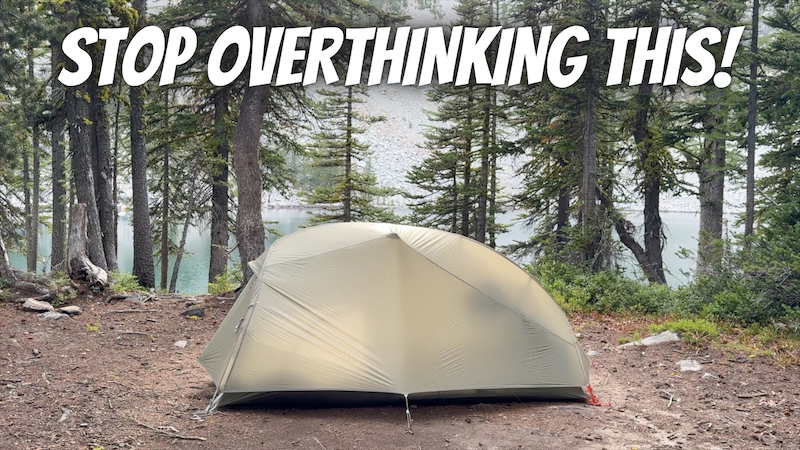
Most beginner backpackers think planning a trip takes hours…maybe even weeks.
Maps. Mileage. Permits. Gear. Food.
And this quite honestly is probably why so many people never get started. It feels overwhelming before you even take the first step.
Here’s the truth:
- Planning a backpacking trip doesn’t have to be complicated
You don’t need perfect information
You just need a simple system
In this guide, I’m going to show you exactly how to plan a 3-day backpacking trip in about 10 minutes using the same framework I use for when planning my own backpacking trips.
The Simple 5-Step Backpacking Planning System
Instead of overthinking every decision, break your trip planning into five simple steps:
- Choose a destination
- Map your route
- Create a flexible itinerary
- Check logistics
- Plan food, gear and do a confidence check
That’s it.
Let’s walk through each step.
Step 1: Choose a Destination (Don’t Overthink This)
This is where most beginners get stuck. They think they need to find the perfect trail.
You don’t.
You just need a good enough starting point.
Most of my trips start simply with:
- A place a friend mentioned
- A hike I saw online
- A place I added to my “someday” list
From there, I pick based on how I want the experience to feel, not just distance.
Ask yourself:
- Do I want something quiet or popular?
- Scenic or forested?
- Challenging or more beginner-friendly?
For beginners, look for:
- Loop trails or out-and-backs (simpler logistics)
- Reliable water sources
- Established campsites
- Mileage you can break into multiple days
Step 2: Map Your Route (Using the Right Tools)
You don’t need to rely on just one resource. In fact, you shouldn’t.
Use multiple tools to get a full picture:
- AllTrails (maps, photos, recent reviews)
- Local trail organizations (like Washington Trails Association)
- Mapping apps (like Gaia GPS or onX Backcountry)
But here’s the key. Don’t just scroll. Ask questions:
- Where are people camping?
- Where is water available?
- What sections are steep or challenging?
- What are recent trail conditions?
This is how you go from “looking at a map” to actually understanding your route.
Step 3: Create a Flexible Itinerary
This is where a lot of beginners get nervous. “What if I pick the wrong mileage?”
Here’s the mindset shift: Your itinerary is a draft, not a commitment.
For a 3-day / 2-night trip, a simple structure might look like:
- Day 1: 8–9 miles
- Day 2: 7–9 miles
- Day 3: 6–7 miles
When planning each day, consider:
- Mileage
- Elevation gain/loss
- Campsites
- Water access
The goal is not perfection.
It’s creating a plan that gives you:
- Direction
- Flexibility
- Confidence to start
Then once you’re on trail, you can always adjust the plan.
Step 4: Check Logistics (This Makes the Trip Feel Real)
This is the step that turns your idea into an actual plan.
Look at:
- Do you need a permit?
- What’s the parking situation?
- How do you get to the trailhead?
- What’s the weather forecast?
- What are current trail conditions?
- Are there water sources along the route?
Also consider:
- Staying near the trailhead the night before
- Road conditions (especially forest service roads)
- Trail use (hikers, bikers, horses, etc.)
This step reduces surprises and builds confidence fast.
Step 5: Plan Food, Gear + Do a Confidence Check
Now keep it simple.
Food (for 3 days):
- 2 breakfasts
- 2 lunches
- 2 dinners
- Snacks every 60–90 minutes
- A dessert (don’t skip this)
Gear: Focus on essentials:
- A pack
- Shelter system
- Sleep system
- Water filtration
- Cooking system
- First aid kit
- The 10 Essentials
Then adjust based on conditions:
- Temperature
- Elevation
- Weather
My Overnight Backpacking Gear List (with links for where you can find everything online)
Final Step: The Confidence Check
Before every trip, ask yourself:
- Do I understand the route?
- Am I comfortable with the mileage?
- Do I know where water is?
- What’s the weather looking like?
- Are there exit points if needed?
- Did I share my plan with someone?
This is what actually builds confidence. Not having perfect plans but having enough clarity to take the first step.
Why Most Beginners Stay Stuck (And How to Move Forward)
Most beginner backpackers don’t need more information. They need a way to think through the process.
Without a system, trip planning turns into:
- Overthinking
- Second-guessing
- And putting it off “until later”
And later turns into… not this season.
If You’re Thinking “I Still Don’t Know If I Could Do This…”
That’s completely normal.
This is exactly the stage where most women get stuck. Not because they don’t want to go but because they don’t fully trust themselves yet.
That’s a big part of why I created The Confident Solo Female Backpacker System.
What most people need isn’t more random tips…
- It’s a clear, step-by-step process
- Support while they’re planning
- And guidance to actually follow through
Inside this program, I help you:
- Plan your first (or next) backpacking trip step-by-step
- Make confident decisions about gear, food, and safety
- Stop overthinking and actually get out on trail
Plus, you also get:
- Weekly live coaching
- A supportive community of women located all across the country
- Accountability so your trip actually happens
- The opportunity to join me for group trips throughout the year
You can learn more about the program here: The Confident Solo Female Backpacker System.
Final Thoughts
Backpacking trip planning doesn’t have to take hours. It doesn’t have to feel overwhelming and it definitely doesn’t have to be perfect.
You just need a simple system you can trust.
Once you know how to plan your trip, everything starts to feel possible and THAT’S when you actually go.
Disclaimer: The-Hungry-Hiker.com is a participant in the Amazon Affiliate Links and AvantlInks Program, affiliate advertising programs designed to provide a means for sites to earn advertising fees by advertising and linking to Amazon.com and other affiliated sites at no cost to you. Please note, I only link to products and services I personally use and trust.
I love your blog and your YouTube channel. Keep creating!
Thank you!