
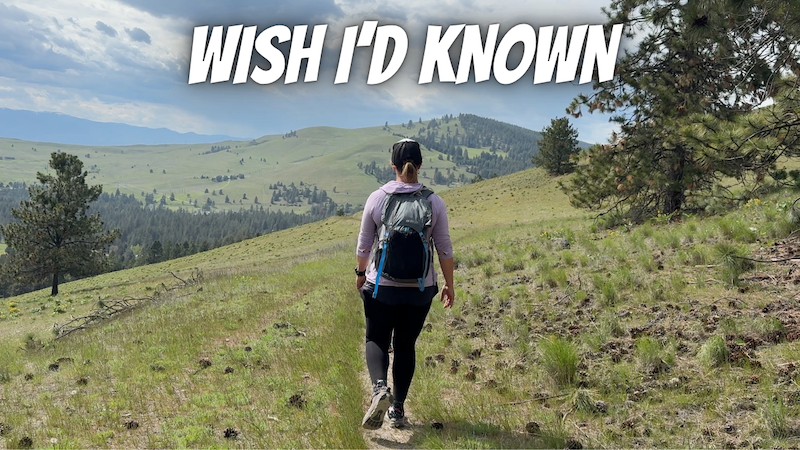
If you’ve ever thought about hiking alone but felt nervous, overwhelmed or unsure if you could actually do it, you’re not alone.
Before you ever step foot on a trail by yourself, there are a few important things you need to know and most of them have nothing to do with hiking gear or fitness. They have everything to do with your mindset, your awareness and learning how to trust yourself.
The hardest part about hiking alone usually isn’t the trail itself.
It’s the fear.
The overthinking.
The self-doubt.
And learning how to move through it anyway.
The Real Challenge of Hiking Alone Isn’t the Trail
When most people think about solo hiking, they imagine physical challenges like:
- Getting lost
- Wildlife encounters
- Tough terrain
- Gear issues
In reality, the biggest challenge happens before you even leave your car.
It sounds like:
What if something goes wrong?
What if I can’t handle it?
What if I shouldn’t be doing this alone?
This mental spiral is what stops most beginners from ever getting started. Not lack of skill. Not lack of fitness but fear of the unknown.
What I Wish I Knew Before I Started Hiking Alone
When I first started hiking alone, even driving to a trailhead felt intimidating.
Over time, I learned something important:
Fear doesn’t disappear before you go.
Confidence builds after you go.
The more I practiced solo hiking, the more I realized that preparation, not perfection, is what creates confidence.
1. People Will Project Their Fears Onto You
One of the first things I had to learn is that other people’s fears are not your reality.
When you tell someone you hike alone, you might hear:
That’s dangerous.
You shouldn’t do that.
Isn’t that risky?
Most of those comments come from people who don’t hike alone and often haven’t researched what safe solo hiking actually looks like.
The truth is: Risk exists everywhere, not just on trails. Parking lots, roads, cities and neighborhoods all carry risk too.
The goal isn’t to avoid risk completely. The goal is to learn how to manage it.
2. Preparation Reduces Fear More Than Anything Else
One of the biggest mindset shifts I made was learning this:
The more prepared I am, the quieter my fear becomes.
Before every solo hike, I check:
- Trail conditions
- Weather
- Road access
- Recent trip reports
I also download offline maps using apps like Gaia GPS or onX Backcountry so I can navigate even without cell service.
Preparation doesn’t remove all uncertainty but it removes unnecessary doubt and that alone changes everything.
3. Hiking Alone Requires Awareness, Not Fear
A big misconception about solo hiking is that you need to be afraid in order to be safe. That’s not true.
Instead, you need awareness.
That means:
- Knowing your surroundings
- Listening to your environment
- Avoiding distractions like headphones
- Staying present on trail
For example, hearing a mountain biker or wildlife approaching is part of staying aware, not being anxious.
Awareness keeps you safe. Fear just keeps you stuck.
4. You Don’t Owe Strangers Your Information
When hiking alone, especially as a woman, you do not need to share personal details with strangers.
If someone asks where you’re going or if you’re alone, it’s okay to keep things vague. Your safety and comfort matter more than being polite.
Another helpful practice is waiting to share your hike photos or location until you’re safely home.
5. Confidence Comes From Experience, Not Elimination of Fear
One of the most powerful lessons I’ve learned from over 10 years of hiking alone is this:
Confidence doesn’t come from waiting until you feel ready. It comes from going anyway.
Every solo hike teaches you something:
- How to problem-solve
- How to stay calm
- How to make decisions
- How to trust yourself
Even imperfect hikes build confidence.
Sometimes the trail is beautiful.
Sometimes it’s not what you expected.
Sometimes things don’t go perfectly.
None of that makes the experience a failure. It just makes it real.
6. The Benefits of Hiking Alone Go Beyond the Trail
Once you start hiking alone, you begin to notice something unexpected:
The mental noise gets quieter.
No distractions.
No pressure.
No constant input from other people.
Just space.
Space to think.
Space to reset.
Space to reconnect with yourself.
That confidence doesn’t stay on the trail. It follows you home.
Ready to Start Hiking Alone?
If you’re feeling stuck or unsure where to begin, I created a free guide: The Solo Backpacking Readiness Check
This free guide will walk you through how to start hiking alone in a way that feels manageable, safe and realistic.
Final Thoughts: You Don’t Have to Feel Ready to Start Hiking Alone
If you take nothing else from this, let it be this:
You don’t need to eliminate fear to start hiking alone. You just need to learn how to move forward with it.
Start small.
Choose easy trails.
Prepare ahead of time.
Build experience one hike at a time.
Confidence isn’t something you wait for. It’s something you build.
One day, you’ll look back and realize the thing that once felt intimidating became the thing that changed how you trust yourself.
Disclaimer: The-Hungry-Hiker.com is a participant in the Amazon Affiliate Links and AvantlInks Program, affiliate advertising programs designed to provide a means for sites to earn advertising fees by advertising and linking to Amazon.com and other affiliated sites at no cost to you. Please note, I only link to products and services I personally use and trust.
1 Comment on What You Need to Know Before Hiking Alone